
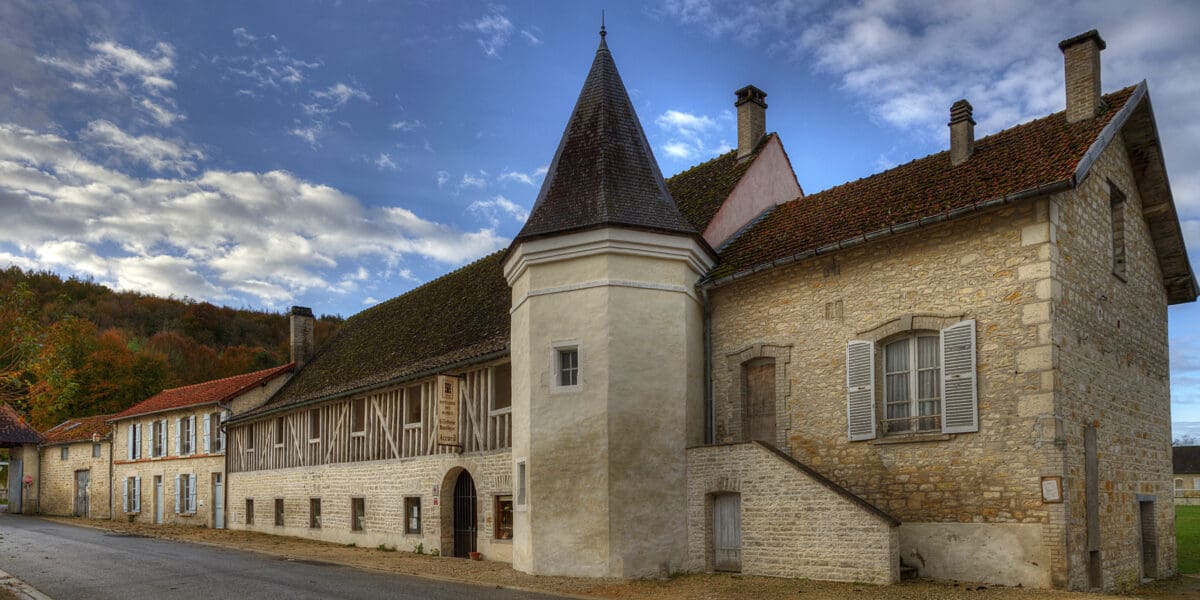
Within the walls of Clairvaux, two stories that could hardly be more different come together: on the one hand, that of a Cistercian abbey; on the other, that of a central prison which, until 2023, was one of the most heavily guarded in France. It is this dual history that Gérard Beureux, president of the Renaissance de l’Abbaye de Clairvaux association, is committed to passing on.
From a maths teacher to the chair of an association
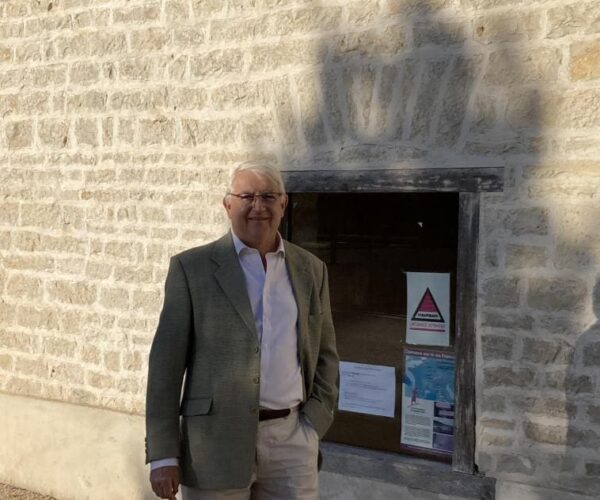
Gérard Beureux, a mathematics teacher in the preparatory classes at the Lycée Marie de Champagne in Troyes, was no historian. It was his meeting with Jean-François Leroux, president and founder of the Renaissance de l’Abbaye de Clairvaux association, that would make him the guardian of an illustrious legacy. “He really encouraged me to join him as an active volunteer,” he recalls. From this meeting sprang a friendship, then a commitment: Gérard Beureux gradually became more involved until he became vice-president. When his friend passed away, the presidency fell to him almost naturally: “People didn’t rush to step in, so it was natural for me to take on this responsibility,” he explains, before adding that this succession was no doubt “part of the plan” for Jean-François Leroux from the outset. “I succeeded him in February 2021,” he says simply. Since then, he has held this role whilst also continuing to work as a volunteer guide at the abbey, sharing the history of the site.
What motivates him to get involved there now? “First of all, it’s an absolutely fascinating site,” he says, before adding that Clairvaux is also a place “that needs looking after”.
From abbey to prison: a fascinating story
In 1115, Bernard de Fontaine, a young monk from Cîteaux, was sent by Abbot Stephen Harding to found a new abbey. He chose a secluded valley in the Aube region, blessed with water, woodland and arable land, in keeping with the Cistercian ideal of simplicity. He renamed it Clairvaux, the ‘clear valley’. But Bernard was not merely a founder and abbot: he became one of the most influential figures of his time. A renowned theologian, he wrote numerous treatises and advised kings and popes, even going so far as to preach the Second Crusade at Vézelay before the crowd gathered around Louis VII. His authority also extended to the area immediately surrounding Clairvaux: the Counts of Champagne, in particular Thibaut II, were among his closest supporters, protecting the abbey and granting it lands and privileges that enabled it to establish a lasting presence in the region.
This extraordinary figure goes a long way towards explaining the meteoric rise of Clairvaux Abbey. In the space of a century and a half, 750 monasteries for men and 1,000 convents for women were established across Europe, including 350 direct offshoots of Clairvaux, 69 of which were founded by Bernard of Clairvaux himself. ‘Can you imagine the network that spanned Europe?’ This influence was accompanied by economic development driven by 20 to 30 granges – fully-fledged agricultural units scattered throughout the region.
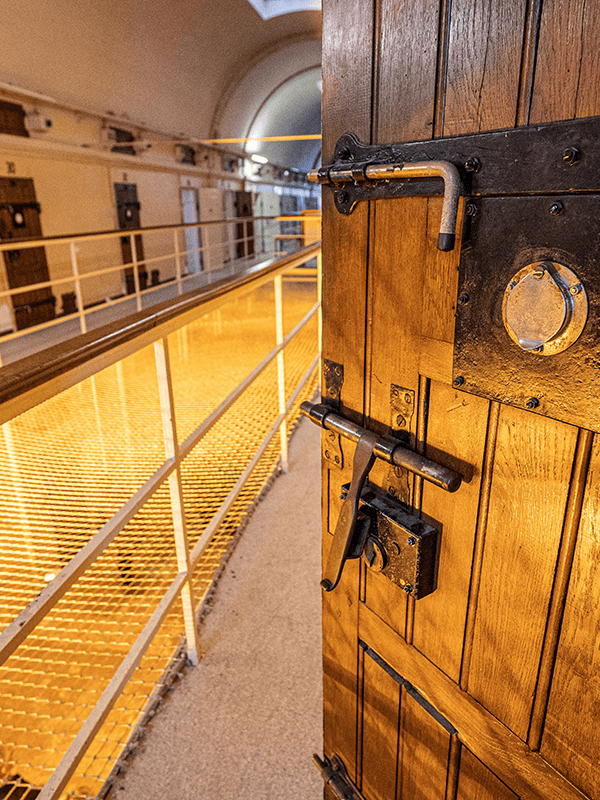
After the French Revolution, the abbey was converted into a prison under Napoleon, and went on to become one of the largest in France: “Everyone knew Clairvaux,” sums up Gérard Beureux. It owes much of its fame to having housed, over the centuries, several famous prisoners, from Claude Gueux to the terrorist Carlos. It specialised in housing prisoners serving long sentences, becoming a central prison until its closure in May 2023. It is this dual history that Gérard Beureux is equally keen to share: “It is a place of dual historical significance,” he sums up, bridging its monastic past and its history as a prison.
Within the walls: bringing Clairvaux to life in everyday life
Gérard has committed himself, alongside the association, to a mission of passing on knowledge, which, in the case of Clairvaux, involves creating experiences for visitors to bring the site to life and breathe new life into its history.
Every day, Gérard and the Clairvaux guides take visitors on a journey through the abbey and the prison. Visitors can choose to explore either the monastic world or the prison world. A three-hour extended tour allows the most curious visitors to explore both histories. Gérard enjoys observing visitors’ reactions as they enter the Convers Building—named after the monks who once worked in the fields—or the Isolation and Disciplinary Wing (QIQD), which was still housing inmates less than 10 years ago. Eventually, he hopes to reintegrate Building A into the prison tour route; it was saved from a demolition project thanks to a media campaign of which he remains quite proud: “I don’t think it’s an exaggeration to say we saved it.” The Grand Cloister, meanwhile, is currently closed to visitors: it is undergoing restoration work designed to restore its grandeur and beauty.
The association is brimming with ideas for keeping these places alive and surprising its visitors, as Gérard jokes: “As you can see, we’re not exactly lacking in imagination when it comes to winning over our audience!”
Gérard has committed himself, alongside the association, to a mission of passing on knowledge, which, in the case of Clairvaux, involves creating experiences for visitors to bring the site to life and breathe new life into its history.
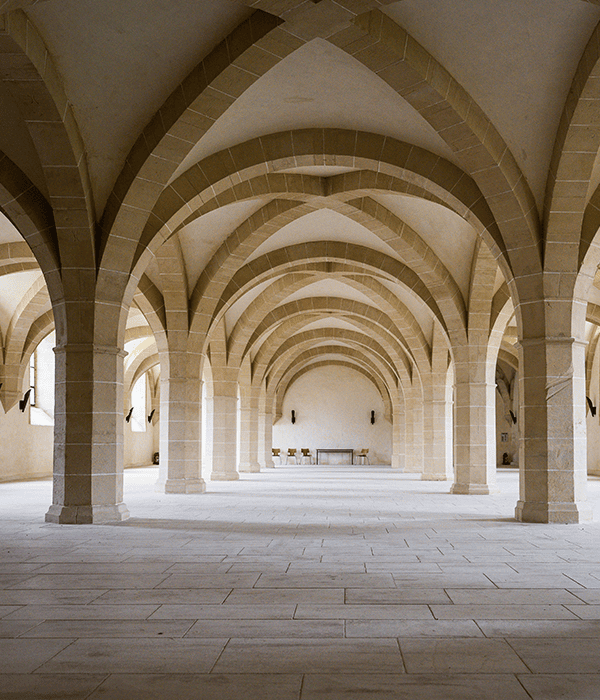
Every day, Gérard and the Clairvaux guides take visitors on a journey through the abbey and the prison. Visitors can choose to explore either the monastic world or the prison world. A three-hour extended tour allows the most curious visitors to explore both histories. Gérard enjoys observing visitors’ reactions as they enter the Convers Building—named after the monks who once worked in the fields—or the Isolation and Disciplinary Wing (QIQD), which was still housing inmates less than 10 years ago. Eventually, he hopes to reintegrate Building A into the prison tour route; it was saved from a demolition project thanks to a media campaign of which he remains quite proud: “I don’t think it’s an exaggeration to say we saved it.” The Grand Cloister, meanwhile, is currently closed to visitors: it is undergoing restoration work designed to restore its grandeur and beauty.
The association is brimming with ideas for keeping these places alive and surprising its visitors, as Gérard jokes: “As you can see, we’re not exactly lacking in imagination when it comes to winning over our audience!”
Beyond Clairvaux: a legacy that can still be seen today
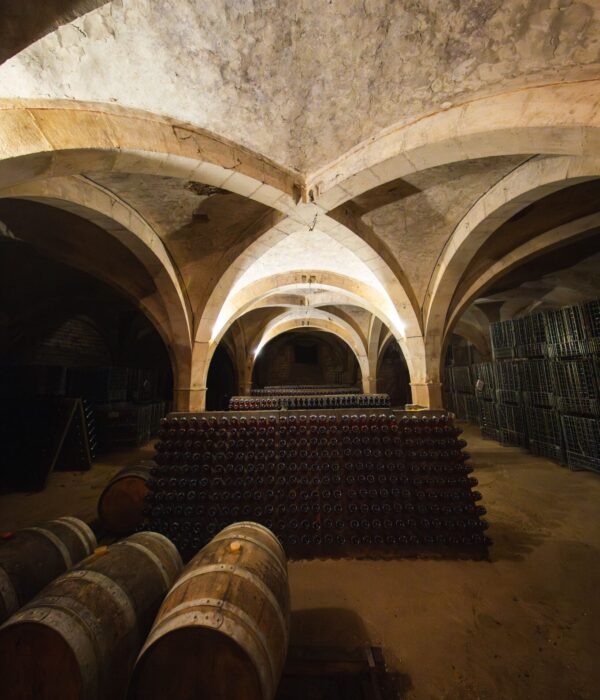
The influence of Clairvaux extends beyond its walls. In Colombé-le-Sec, the Cellier aux Moines serves as its extension: a wine barn where, as early as 1194, the monks cultivated vines and produced wine beneath Gothic vaults, making this one of the very first places where wine was produced on the Côte des Bar. Upstairs, the Saint-Michel Chapel serves as a reminder that vineyard work and religious life went hand in hand. The wine cellar clearly illustrates just how much the Cistercian order was also a genuine economic enterprise: its wines established the reputation of this region long before the Aube became part of the Champagne appellation. Now owned by Champagne Monial, visitors can tour the Cellier aux Moines as part of a Champagne tasting session.
This winemaking expertise was underpinned by a whole network of farms established by the abbey. In Champignol-lez-Mondeville, the Chapel of the Annunciation also bears witness to this past: a former Cistercian farm where Bernard of Clairvaux is said to have performed a miraculous healing. Its large porch and vaults serve as a reminder of the scale of this network, which comprised some forty farms dedicated to agriculture, forestry or wine-growing.
It was in Urville that this influence left its most lasting mark. As early as 1116, Bernard of Clairvaux reorganised the vineyards there, brought in the ‘Morillon Noir’—the forerunner of Pinot Noir—from Burgundy, and had cellars built. By the time of his death in 1153, production had already exceeded 600,000 litres a year. After the Revolution, these cellars became the village priest’s residence, before being purchased by the Drappier family after the war. Today, visitors can explore the cellars as part of a tour of the estate. Proud of this heritage, Drappier has developed a unique cuvée to pay homage to Clairvaux: Clarevallis (the Latin name for the abbey).
