
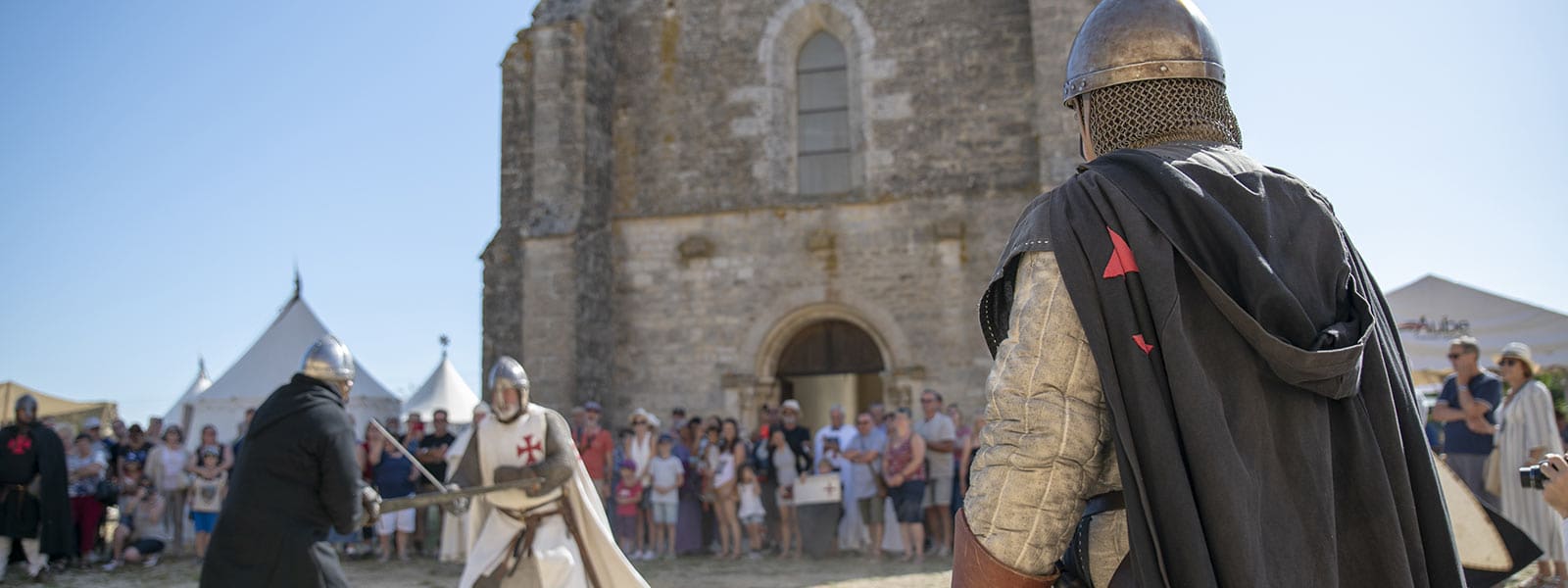
Few places can claim such a strong connection to the history of the Knights Templar as the Aube. It was in Payns, near Troyes, that Hugues de Payns, founder of the Order of the Temple, was born. It was also in the County of Champagne that the knights found the support they needed to grow before extending their influence across Europe. Nine centuries later, their legacy is still very much alive. From villages and commanderies to forests steeped in history, follow in the footsteps of one of the most fascinating orders of the Middle Ages.
Why is the Aube considered the birthplace of the Knights Templar?
When we think of the Knights Templar, Jerusalem, the Crusades and legends of their mysterious treasure often spring to mind. Yet much of their story began in Champagne, and more precisely in what is now the Aube department.
In the early 12th century, Hugues de Payns, a knight from the village of Payns, joined forces with a small group of companions to establish an order dedicated to protecting pilgrims travelling to the Holy Land. The Counts of Champagne soon lent their support to this initiative. Their influence helped the Order of the Temple grow rapidly.
In 1129, a major event took place in Troyes: the Council of Troyes officially recognised the Order of the Temple. Under the influence of Bernard of Clairvaux, founder of the Cistercian Abbey of Clairvaux, the Order was given a rule governing its religious and military life. This recognition marked the true beginning of the Templars’ expansion across Europe.
Although their story would later unfold throughout the Holy Land and Western Europe, it was here in the Aube that the foundations of this extraordinary adventure were laid.
Following in the footsteps of the Knights Templar in the Aube
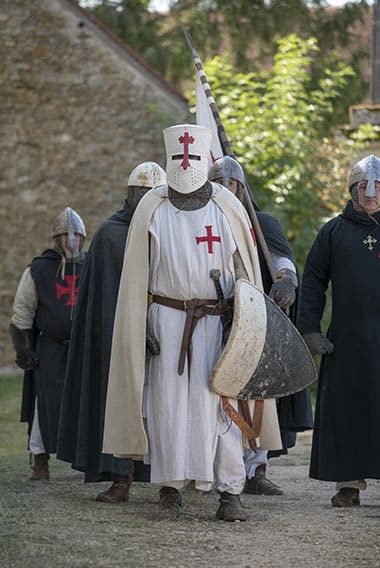
Nine centuries after the Order’s disappearance, the Knights Templar continue to leave their mark on the landscapes of the Aube. Today, several remarkable sites invite visitors to explore their history while discovering an exceptional heritage.
Avalleur Commandery, the Aube’s finest Templar legacy
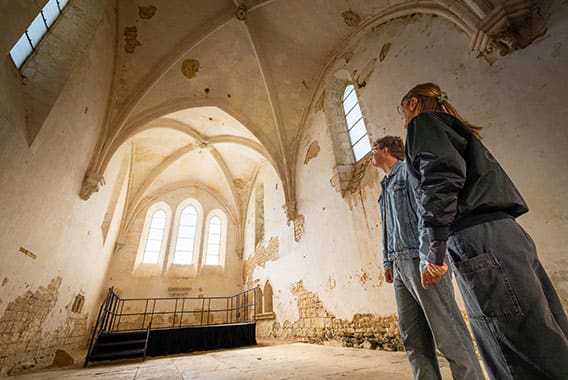
In Bar-sur-Seine, Avalleur Commandery is one of the best-preserved Templar complexes in France. Founded in the 12th century, it illustrates the essential role played by commanderies in the organisation of the Order. Its remarkably well-preserved chapel still overlooks the estate. The surrounding remains offer a glimpse into the daily lives of the Templar brothers, who managed farmland, welcomed travellers and administered resources used to support missions in the Holy Land.
Today, the commandery hosts guided visits, exhibitions and events, offering a fascinating insight into the world of the Knights Templar in a beautifully preserved setting.
Payns, where the Order began
No journey through Templar history would be complete without a stop in Payns. This is where Hugues de Payns, founder of the Order of the Temple, was born.
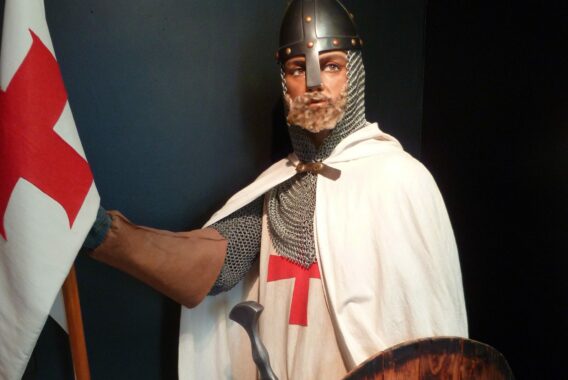
The village keeps this history alive through the Hugues de Payns Templar Museum, which explores the origins of the Order, its development and its influence across Europe. It is the perfect place to understand why this small village in the Aube holds such an important place in medieval history.
Troyes Cathedral, a landmark in the founding of the Order
Although the Cathedral of Saint Peter and Saint Paul in Troyes that we admire today was built several decades after the founding of the Order of the Temple, it stands on a site steeped in history. It was here, in January 1129, that the famous Council of Troyes took place. Gathered under the authority of the Church, leading religious dignitaries officially recognised the Order of the Temple and adopted a rule of life inspired by Bernard of Clairvaux. This event marked a decisive turning point: the Templars became a recognised religious and military order, ready to expand throughout Europe.
Clairvaux Abbey, the spiritual birthplace of the Knights Templar
Not far away, Clairvaux Abbey reveals another fascinating chapter in Templar history. Founded in 1115 by Bernard of Clairvaux, one of the most influential figures of the Middle Ages, the abbey was never a Templar commandery. Nevertheless, its influence on the Order’s destiny was considerable. An adviser at the Council of Troyes, Bernard of Clairvaux helped shape the Templars’ rule and defended their mission in his treatise De laude novae militiae (“In Praise of the New Knighthood”). By giving these warrior-monks spiritual legitimacy, he contributed to their rise and influence across Europe. Today, a visit to Clairvaux Abbey offers a deeper understanding of the religious and intellectual environment in which the Order of the Temple emerged.
The Forêt du Temple, where nature meets history
Around the great lakes of the Forêt d’Orient stretches a vast woodland whose name still recalls the presence of the Knights Templar: the Forêt du Temple, or Templar Forest. During the Middle Ages, this estate belonged to the Order of the Temple, which managed its woodland resources, developed ponds and administered extensive landholdings. It was one of the largest forest estates managed by the Templars in Western Europe.
Today, an interpretation trail brings this history to life on a walk where natural heritage and medieval memories come together. It is an original way to discover the true story of the Knights Templar, far from the usual myths, in the unspoilt landscapes of the Forêt d’Orient Regional Natural Park.


The Aube at the heart of the European Templar Route
As the historical birthplace of the Order of the Temple, the Aube now plays a leading role in promoting this heritage across Europe. Together with the Portuguese town of Tomar, the last great stronghold of the Knights Templar, the Aube department helped establish the Templars Route European Federation in 2016, with the aim of developing a cultural route linking Europe’s major Templar sites.
Today, this partnership brings together several European regions with a shared ambition: to preserve, study and showcase a heritage that transcends borders. From Payns to Avalleur, from Troyes to Clairvaux, the Aube represents the starting point, the “Alpha” of this great European adventure, while Tomar represents the “Omega”, where the Order’s history continued after its disappearance in France.